Our global White Collar Defense and Investigations group represents public companies, boards of directors, audit committees, corporate executives, and public officials in the full range of internal and government investigations, regulatory proceedings, congressional oversight, and other matters that present complex reputational, financial, and operational risk. With a deep bench of experienced practitioners throughout the United States, United Kingdom, Europe, Asia, and Australia our legal team has earned a reputation for advising clients in the most sensitive and high-visibility enforcement and regulatory matters worldwide.
We offer our clients comprehensive, multijurisdictional legal advice in matters involving:
Accounting fraud
Anti-bribery and anti-corruption (ABC) compliance
Anti-money laundering (AML) and Bank Secrecy Act (BSA)
Antitrust and price fixing
Consumer product safety investigations
Corporate fraud
Cyber investigations
Digital currency and crypto investigations
Economic sanctions
Environmental crimes
Extradition
Foreign Agents Registration Act (FARA)
Healthcare fraud and anti-kickback matters
Internal investigations
Market manipulation and insider trading
Office of Inspector General (OIG) investigations
Securities enforcement and financial regulatory enforcement
State attorney general investigations
Tax crimes
Trade secrets and economic espionage
Trademark and intellectual property infringement
UK Bribery Act
UK health and safety investigations
US False Claims Act
US Foreign Corrupt Practices Act (FCPA) and Foreign Extortion Prevention Act (FEPA)
White Collar Defense and Investigations Legal Services in the United States
We have deep and diverse experience representing clients in enforcement matters and criminal, civil, and regulatory investigations involving the:
US Department of Justice (DOJ)
US Attorney’s Offices
US Securities and Exchange Commission (SEC)
Commodity Futures Trading Commission (CFTC)
Office of Foreign Assets Control (OFAC)
Financial Industry Regulatory Authority (FINRA)
State attorneys general
Other federal and state regulators
First-Hand Government Enforcement Experience
Our US-based team is comprised of former senior officials from the DOJ’s Criminal Division and Civil Division, the SEC’s Division of Enforcement, the White House Counsel’s Office, as well as two former US Attorneys, a former member of DOJ’s FCPA Unit, and nearly a dozen former federal prosecutors and supervisors from US Attorney’s Offices and state attorney general offices nationwide.
We have represented clients in nearly every significant US government investigative and enforcement initiative in the last 50 years. Recent examples include the FTX investigation, Operation KleptoCapture, the January 6 Committee investigation, multiple Office of Special Counsel investigations, the global auto emissions scandal, Brazil’s Operation Carwash, 1Malaysia Development Berhad (1MDB), the subprime mortgage crisis, the Unaoil investigations, Petrofac, Rio Tinto, the Madoff investments Ponzi scheme, Enron, WorldCom, and many more. Collectively, our White Collar Defense and Investigations team has litigated hundreds of criminal matters in federal and state courts throughout the United States. Our decades of government experience give us deep, first-hand insight into how enforcement agencies and regulators operate, enabling us to pursue an advocacy strategy designed to minimize our clients’ reputational, financial, and liability exposure.
White Collar Defense and Investigations Legal Services Across Europe and Asia
We assist clients with matters involving the:
UK Serious Fraud Office (SFO) and Financial Conduct Authority (FCA)
Securities and Futures Commission of Hong Kong (SFC)
Ranked by Chambers USA for Litigation: White Collar Crime & Government Investigations in Pennsylvania, 2026
Ranked by Chambers UK for Corporate Crime & Investigations in London, 2026
Ranked by Chambers USA for Litigation: White Collar Crime & Government Investigations in Pennsylvania, 2025
Legal 500
Ranked by The Legal 500 United Kingdom for Regulatory Investigations and Corporate Crime (Advice to Corporates) in London, 2027
Ranked by The Legal 500 United States for Corporate Investigations and White-Collar Criminal Defense – Advice to Corporates, 2026
Ranked by The Legal 500 United States for Corporate Investigations and White-Collar Criminal Defense – Advice to Individuals, 2026
Ranked by The Legal 500 United Kingdom for Electoral in London, 2026
Ranked by The Legal 500 United Kingdom for Regulatory Investigations and Corporate Crime (Advice to Corporates) in London, 2026
Ranked by The Legal 500 United Kingdom for Fraud: White-Collar Crime (Advice to Individuals) in London, 2026
Ranked by The Legal 500 United States for Corporate Investigations and White-Collar Criminal Defense - Advice to Corporates, 2025
Ranked by The Legal 500 United States for Corporate Investigations and White-Collar Criminal Defense-Advice to Individuals, 2025
The K&L Gates team is incredibly effective, practical, and efficient. They are a great resource in connection with some of our most sensitive and challenging matters.
We welcome your email, but please understand that if you are not already a client of K&L Gates LLP, we cannot represent you until we confirm that doing so would not create a conflict of interest and is otherwise consistent with the policies of our firm. Accordingly, please do not include any confidential information until we verify that the firm is in a position to represent you and our engagement is confirmed in a letter. Prior to that time, there is no assurance that information you send us will be maintained as confidential. Thank you for your consideration.



 Anti-Bribery and Anti-Corruption
 Anti-Money Laundering (AML)
 Federal, State, and Local False Claims Act
 Internal Investigations
 Securities Enforcement / Financial Regulatory Enforcement
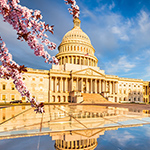 US Congressional Investigations