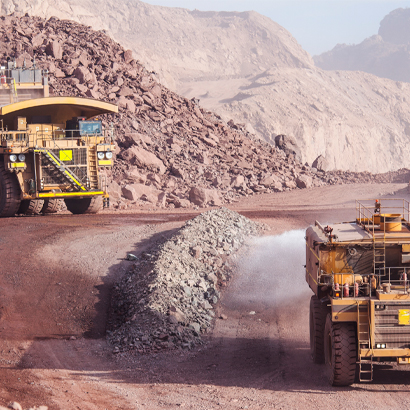
Our Mining, Minerals, and Metals lawyers advise clients in the minerals, mining, steel, and specialty metals industries across Africa, Asia, Australia, Europe, the Middle East, North America, Russia and the CIS, and South America.
Our experience spans the range of natural resources exploration, development and production companies—including base and precious metals, minerals, coal, steel and aggregates. We represent mining and metals companies, investors, and advisors in all aspects of their businesses. Our global platform includes lawyers with experience across a broad range of disciplines who work seamlessly to ensure effective and efficient staffing for every client project.
Antitrust and competition
Capital markets
Cartel investigations
Contracts
Distribution arrangements
Environmental claims, permitting, and compliance
EU Regulation on Registration, Evaluation, Authorisation, and Restriction of Chemicals (REACH)
On 29 September 2026, the Trump Administration issued two executive orders that reflect the continued advancement of artificial intelligence capabilities and its growing role in the delivery of federal services.
While the tactic of mass arbitration has led both defendants and plaintiffs to turn to the courts for relief, courts have been reluctant to come to the aid of either party.
On 20 February 2026, the US Supreme Court issued its decision in Learning Resources, Inc. v. Trump, consolidated with Trump v. V.O.S. Selections, Inc., addressing whether the President has authority under the International Emergency Economic Powers Act to impose tariffs.
We welcome your email, but please understand that if you are not already a client of K&L Gates LLP, we cannot represent you until we confirm that doing so would not create a conflict of interest and is otherwise consistent with the policies of our firm. Accordingly, please do not include any confidential information until we verify that the firm is in a position to represent you and our engagement is confirmed in a letter. Prior to that time, there is no assurance that information you send us will be maintained as confidential. Thank you for your consideration.